Organic Mattresses · Sleep Essentials
How to Evaluate an Original Mattress Model: Materials, Support, and Fit
A mattress called “Original” may be a brand’s first or best-known design, but the name alone reveals little about what lies beneath the cover. To judge whether a model is right for you, examine its materials, construction, firmness, support system, and fit with your body and bedroom.
Published November 19, 2026
A mattress is a small landscape of materials: fibers, foams, springs, or latex arranged in layers to manage pressure, movement, moisture, and weight. Yet shopping often begins with a name. “Original” sounds definitive, as if it describes a recognized mattress type or a universal standard. It does not. The word is usually a model or collection label, and its meaning changes from one maker to another.
One company’s original mattress might be a foam design; another’s might use coils, latex, or a combination of materials. The label may refer to a foundational model in a product range, but it does not establish the mattress’s firmness, durability, environmental qualities, or suitability for a particular sleeper. Those answers are found in the specifications—and, ultimately, in how the complete bed feels in use.
For shoppers considering organic mattresses, careful evaluation means looking at two kinds of evidence. First, examine the physical design: what each layer is made of and what it is intended to do. Then look at the broader fit: how the mattress meets your sleep position, comfort preferences, foundation, room dimensions, and care expectations. The result is a more useful comparison than a model name can provide.
Start by translating the name into specifications
“Original” is a piece of branding, not a technical description. It does not tell you whether a mattress contains latex, memory foam, polyurethane foam, pocketed coils, wool, cotton, or some combination. It also does not indicate whether the mattress is one-sided or flippable, whether it is designed for an adjustable base, or how its comfort layers are arranged.
Begin with the full product description and look for concrete details rather than broad adjectives. A useful specification should identify the principal materials, the number or order of layers when available, the mattress’s height, the firmness designation, and any requirements for the support base. If those details are missing, ask the seller or manufacturer for clarification before treating the name as a guide.
It can help to separate a mattress description into three questions:
- What is it made from? Identify the core, comfort layers, quilting, cover, and any added barriers or padding.
- How is it built? Learn how the layers work together, whether the surface is quilted, and whether the mattress has one usable side or two.
- How is it meant to feel and function? Check the stated firmness, support characteristics, compatible foundation, warranty, and care instructions.
These questions bring the product back to observable details. If two mattresses both carry “Original” in their names, they may still have entirely different materials and sleep characteristics. Compare their specifications line by line instead of assuming that the shared word signals a shared design.
Materials: understand each layer’s role
The word “organic” can be meaningful, but it should not be used as a shortcut for understanding every component. A mattress may contain several materials, and a claim about one layer does not automatically describe the whole construction. Read the material disclosures carefully: distinguish the cover from the filling, the comfort layers from the support core, and certified components from materials for which no certification is stated.
Latex is used in mattress cores and comfort layers. Depending on its formulation, thickness, and position, it can contribute resilience and cushioning. The term “natural latex” describes a material category, but shoppers should still check what the maker discloses about the latex itself and whether it is blended with other materials. If a specific certification matters to you, verify which component it covers and consult the certifying organization’s current criteria.
Wool may appear as a quilted layer or wrap. It can contribute a cushioned surface and help manage moisture within the bedding system. Its placement and thickness affect how the surface feels. Wool in a mattress does not, by itself, determine firmness or guarantee a particular temperature experience; those depend on the full construction and the sleeper’s circumstances.
Cotton is commonly used in covers and quilted fabrics. It can affect the handfeel and breathability of the surface, while the fabric’s weave and construction influence its texture and durability. A cotton cover is only one part of the mattress, so evaluate it alongside the core and other layers.
Foams and coil systems also vary widely. The terms alone do not specify a mattress’s comfort level or lifespan. Look for information about the type of material, how thick the layers are, and what function each serves. A detailed description should make clear whether a material provides the primary support, a softer surface, transition between layers, or another purpose.
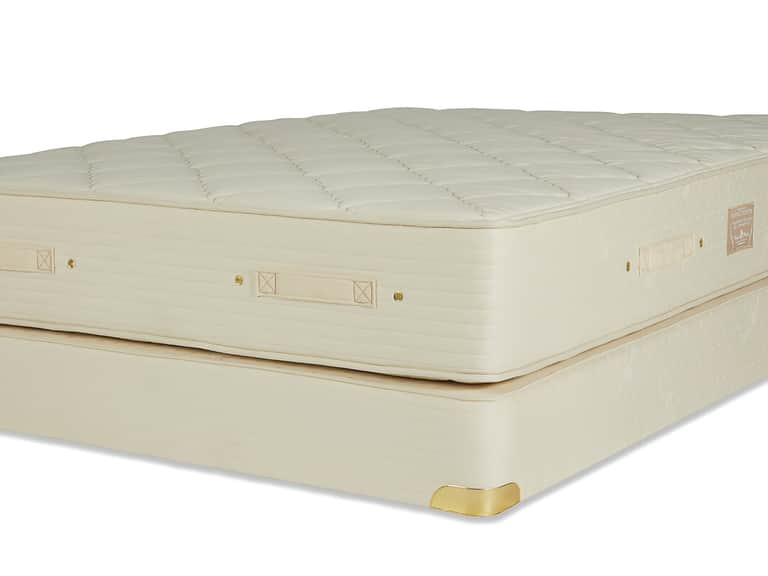
For example, the Royal-Pedic Premier Natural Latex Quilt-Top Mattress is described as having a 10-inch natural latex core, with medium latex in the center and softer latex on both sides, surrounded by wool and a cotton outer fabric. Those details are more informative than a label alone: they describe the materials, their arrangement, and a reversible design. They are product-specific information, not a general definition of what an original or organic mattress must contain.
Certifications: check the scope, not just the badge
Certifications can help shoppers assess materials or manufacturing claims, but a certification mark should be read in context. Find out which material or component is certified, what standard is being applied, and whether the claim refers to the finished mattress or to a particular ingredient. A certification related to a fiber, for example, does not automatically make every other part of a mattress certified.
Look for the certifier’s name and the relevant standard rather than relying on general language such as “eco-friendly,” “clean,” or “natural.” If a product page presents a logo without explaining what it covers, seek the supporting details. Certification is one useful piece of information; it does not independently tell you whether the mattress will feel comfortable, suit your sleep posture, or fit your bed frame.
It is also sensible to distinguish between material origin and finished-product performance. A particular fiber may have a documented source, but the mattress’s overall feel depends on layer thickness, density, quilting, and interaction among components. A careful comparison considers both the documented claims and the complete physical design.
Support and comfort are related, but not identical
In everyday conversation, “supportive” and “firm” are often treated as synonyms. They describe different aspects of the experience. Firmness is the perceived softness or hardness of the surface. Support refers to how the mattress holds the body and responds to its weight. A mattress can feel firm yet provide an uneven fit, or feel relatively cushioned while still supporting the sleeper effectively.
The body’s position offers a practical way to think about that relationship. When lying down, the shoulders, hips, and other heavier or more prominent areas press into the surface. The mattress should provide enough give to accommodate those contours while preventing the body from sinking in a way that feels uncomfortable. The precise balance varies by person, position, body shape, and preference; there is no single firmness level that suits everyone.
A mattress’s support is shaped by its entire construction. The core carries much of the load, while comfort and transition layers affect how that load is distributed and how directly the surface responds. The foundation matters too. A mattress placed on a rigid platform may feel different from the same mattress on a more flexible support system. Before deciding that a mattress feels wrong, confirm that it is resting on a compatible, properly assembled base.
Descriptions such as “medium,” “medium-firm,” or “plush” provide a starting point, not a universal measurement. Firmness labels are not perfectly consistent across manufacturers. Use them to narrow a search, then consider the mattress’s materials and construction and, where possible, evaluate it under a clear trial or return policy. A comfortable choice is the one that works for your body and circumstances, not the one that sounds most authoritative in a product title.
Match the mattress to your sleep position
Sleep position can guide what to test, although many people change positions during the night. Side sleepers often pay close attention to whether the shoulder and hip can settle without creating uncomfortable pressure. Back sleepers may focus on whether the mattress feels balanced beneath the torso and pelvis. Stomach sleepers may prefer a surface that limits an overly deep sinking sensation. These are starting points for observation, not fixed rules.
If you share a bed, the fit question becomes more complex. Partners may differ in body shape, preferred firmness, or movement through the night. Consider whether both sleepers can find a comfortable position and whether either person is disturbed by motion. A mattress’s width and length matter as well: the available sleeping area should accommodate the people using it, plus any need for space to move.
When testing a mattress, spend enough time in your usual sleeping positions to notice pressure and alignment. Pay attention to whether you instinctively shift to escape discomfort, whether you feel supported as you relax, and whether one area of your body seems to carry too much pressure. An initial impression is useful, but a brief showroom test cannot fully reproduce a night of sleep. At home, note the return window, any trial conditions, and what happens if the mattress is not a good fit.
Evaluate the support base and the whole bed
A mattress does not work in isolation. Its support base affects stability and may alter how the surface feels. Check whether the maker allows a platform bed, slats, a box spring, or an adjustable base, and whether there are requirements about spacing or construction. “Compatible” should be confirmed in the product guidance rather than assumed from the mattress category.
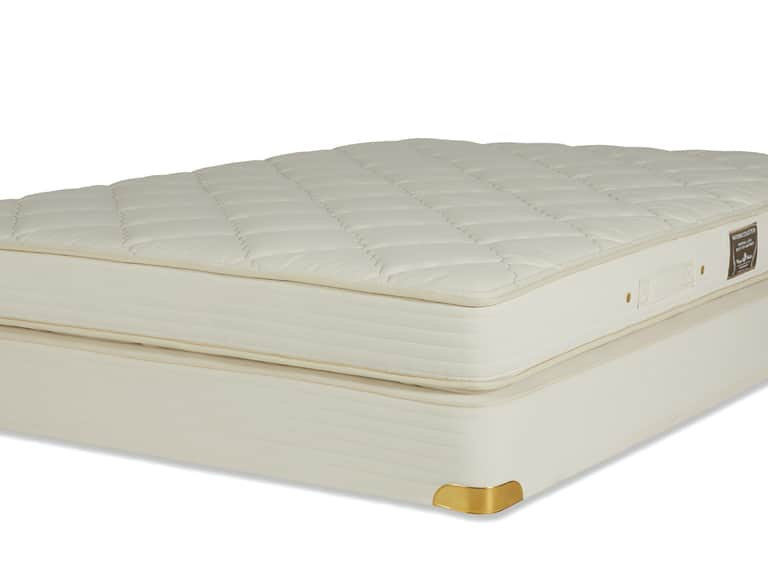
For instance, the Royal-Pedic Natural Latex Quilt-Top Mattress with canvas ticking is described as usable on a platform, box spring, or adjustable base. Its product details also identify an eight-inch latex core and a wool-and-cotton covering. This illustrates why base compatibility should be checked model by model: one mattress’s instructions cannot be applied automatically to another mattress made from similar materials.
Measure the frame and the room before ordering. Confirm the mattress’s stated width, length, and height, as well as the depth of any existing foundation and the fitted-sheet pockets you already own. Doorways, stairs, and tight turns can affect delivery and installation. The bed’s total height—mattress, foundation, and frame combined—may influence how easy it is to get in and out or how the bed fits beneath a window or sloped ceiling.
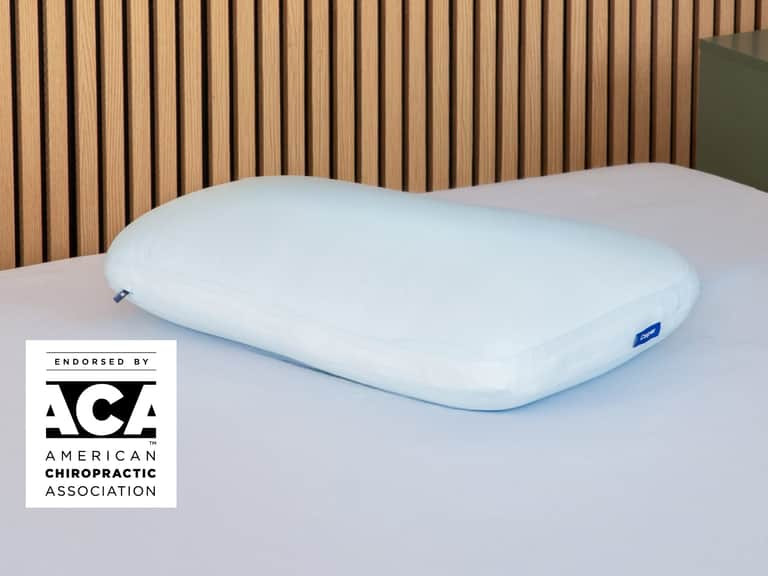
Finally, consider the bedding that will touch the mattress. A protector can help guard against everyday moisture and wear, while pads and toppers may change the surface feel. If you add a thick comfort layer, it may make it harder to assess the mattress’s original feel. Treat the complete bed as a system: mattress, foundation, protector, sheets, pillow, room temperature, and personal sleep habits all contribute to the experience.
Temperature, movement, and everyday comfort
Comfort is not limited to firmness. Some sleepers notice heat, dampness, or a feeling of being trapped in the surface; others are more sensitive to motion from a partner. Material descriptions can offer clues, but they do not guarantee an individual result. A wool layer, for example, may be described as helping with moisture management, while latex is often selected for a resilient response. The outcome still depends on the full mattress, the bedding placed over it, the bedroom environment, and the sleeper.
Consider your current sleep environment before attributing every discomfort to a mattress. A heavy duvet, a warm room, synthetic bedding, or an unsuitable pillow may affect the night’s comfort. If you wake hot, note the season, room conditions, sleepwear, and coverings as well as the mattress. If movement is a concern, pay attention to whether changes in position disturb a partner and seek model-specific information about the construction.
Organic or natural materials may be important priorities, but they do not replace a practical fit assessment. A mattress can contain materials that meet your preferences and still feel wrong for your sleep position. Conversely, a mattress with a less complex material story may be comfortable and appropriate for your needs. The best evaluation keeps material transparency, support, comfort, and household requirements in view at the same time.
Durability, care, and the fine print
A mattress is a long-term household purchase, so examine the information that governs its use after delivery. Check the warranty period and what the warranty actually covers. A stated duration alone does not tell you what conditions apply, how claims are assessed, or which types of wear are excluded. Read the full terms and note any requirements for the foundation, rotation, or care.
Confirm whether the mattress is reversible. A two-sided mattress may be designed to be flipped, but that feature should be explicitly stated. If it has a defined top and bottom, routine rotation—if recommended—may be appropriate, while flipping may not be. Follow the maker’s instructions rather than relying on a general rule, and ask how the mattress should be handled if the cover is stained or damaged.
Care requirements can affect daily life. Some mattress covers are not removable or washable; others may have specific cleaning restrictions. Identify whether spot cleaning is permitted, which products should be avoided, and how the mattress should be protected during a move. A mattress protector can help with spills and routine wear, but it should be chosen to fit the mattress depth and should not interfere with the surface feel you want.
Delivery details deserve the same attention as product specifications. Ask whether the mattress arrives compressed or full-size, what installation service includes, whether old-mattress removal is available, and whether delivery fees apply. Check return conditions, collection charges, and the required trial period if one is offered. A model that appears suitable on paper may be less convenient if its logistics or care expectations do not fit your home.
A practical comparison checklist
When comparing an original mattress model with other options, put the evidence in one place. A brief table or notes app can prevent product names and marketing language from blurring together. Record the following for each candidate:
- Model and construction: What is the full model name, and what are the core, comfort layers, cover, and quilting made from?
- Material claims: Are material origins stated clearly? Which specific components carry certifications, if any?
- Support and firmness: What firmness does the maker report, and how does the surface feel in your usual sleep position?
- Dimensions: Do the mattress size, height, and profile fit the bed frame, room, and existing bedding?
- Foundation: Which bases are permitted, and are there requirements for slats, support, or an adjustable frame?
- Care and construction: Is the mattress flippable or rotatable? What cleaning and maintenance instructions apply?
- Trial and warranty: What are the return conditions, fees, warranty exclusions, and claim requirements?
- Household fit: Will the mattress work for all sleepers sharing it, including their positions, comfort preferences, and space needs?
Give priority to facts you can verify. If a product description says “supportive,” ask what about the construction is intended to provide support. If a mattress is called “organic,” find out which components are certified and which are not specified. If the stated firmness seems ideal, consider whether it is consistent with your own experience rather than treating the label as a promise.
Common misconceptions about “original” models
“Original” means the standard mattress type. It does not. The word is a model name or collection descriptor, and construction varies among manufacturers.
“Organic” tells me exactly what the mattress contains. Not necessarily. Read the component disclosures and check the scope of any certification. A single material claim does not describe every layer.
A firmer mattress must provide better support. Firmness and support are related but distinct. The useful question is whether the mattress supports your body comfortably in your usual positions.
Natural materials guarantee a cooler night. Material properties can contribute to how a bed manages heat or moisture, but the total experience also depends on construction, bedding, room conditions, and individual response.
A mattress that feels right in a brief test will feel right indefinitely. A short test provides an impression, not a complete prediction. Understand the trial and return terms and give yourself a structured way to assess the mattress at home.
A name is an invitation to investigate
The most useful way to evaluate an original mattress model is to treat its name as the beginning of the inquiry, not the answer. Look closely at the materials and how they are layered. Separate firmness from support. Consider sleep position, partner needs, bedroom conditions, foundation compatibility, dimensions, and care. Then review the certifications, warranty, delivery, and return terms with the same attention you give the comfort description.
In the quiet, dark hours when a mattress does its work, branding recedes. What remains is the way the surface responds to a shoulder or hip, how the bed feels when a sleeper changes position, and whether the complete setup supports a comfortable routine. A careful comparison cannot guarantee a perfect night, but it can replace guesswork with better questions—and help ensure that “original” is only a name, never a substitute for understanding the bed beneath it.
Quick takeaways
- “Original” is not a standardized mattress category; compare the construction rather than relying on the name.
- Review each layer and check what any material certification specifically covers.
- Firmness describes surface feel, while support concerns how the mattress holds the body.
- Match the mattress to your sleep position, preferred feel, bed frame, room dimensions, and household needs.
- Confirm care instructions, foundation compatibility, warranty conditions, and return terms before deciding.